

How to Build a Restaurant Marketing Strategy That Actually Fits a Kitchen
Most restaurant marketing advice is written for businesses with a marketing department. Restaurants do not have one. They have a kitchen that opens at eleven, a staff roster that changed this morning, and an owner who will read this between two deliveries.
So the useful question is not "what could we do?" — it is "what order should we do things in, given that almost nothing will get done on a busy week?"
The order that works
Marketing for a restaurant is a stack. Each layer only pays off once the layer under it is solid, and doing them out of order is where most budgets quietly disappear.
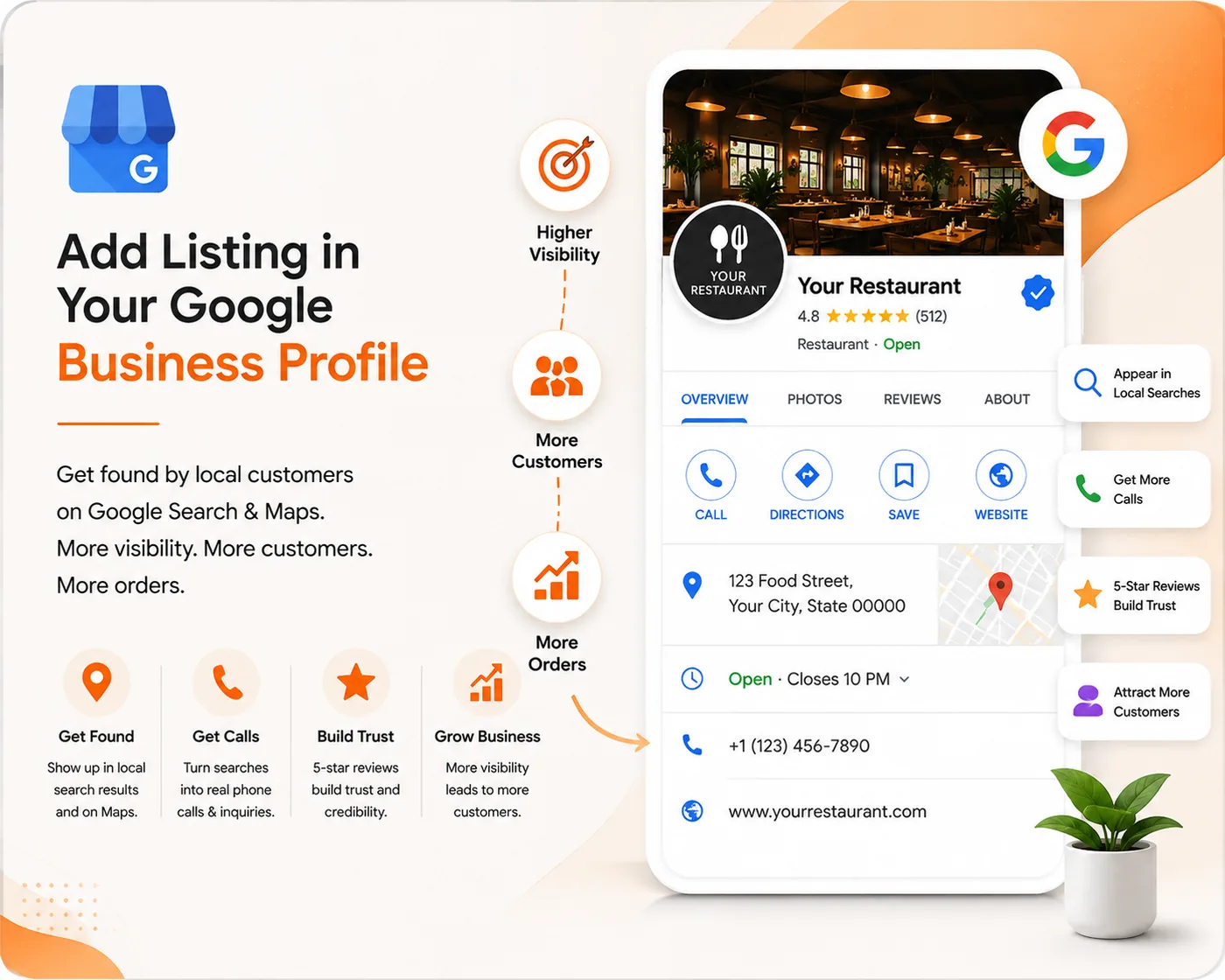
- Be findable. Your Google Business Profile, complete and correct.
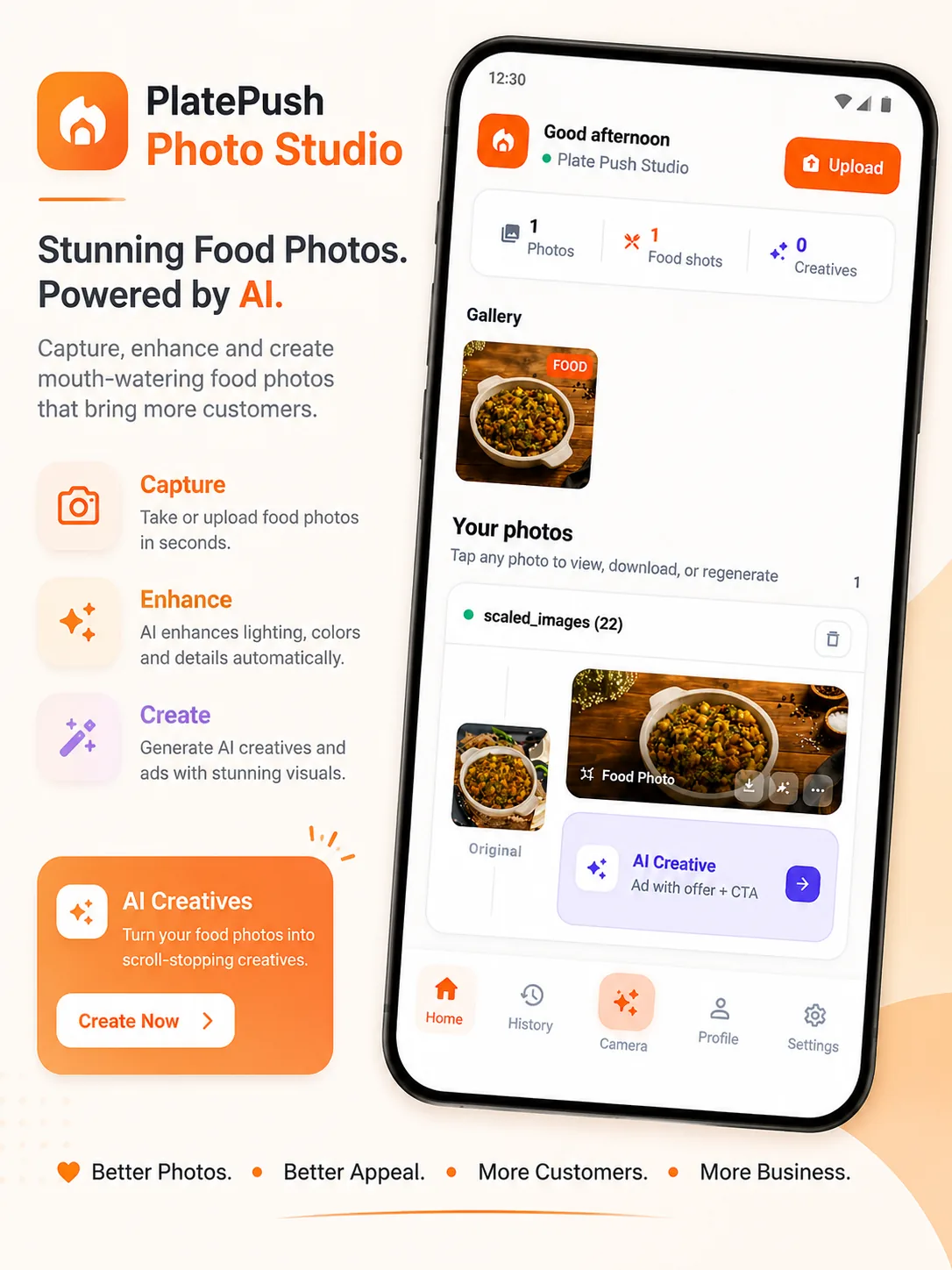
- Be convincing. Photos of your actual food, and replies on your reviews.
- Be reachable. A website that shows the menu, the timings and the location on a phone.
- Be remembered. Social pages that are not four months stale.
- Be pushed. Paid ads — last, because ads amplify whatever the first four layers already say about you.
Running ads before the listing is fixed is the most common and most expensive mistake in this industry. You are paying to send people to a profile with the wrong phone number.
Layer one: findability
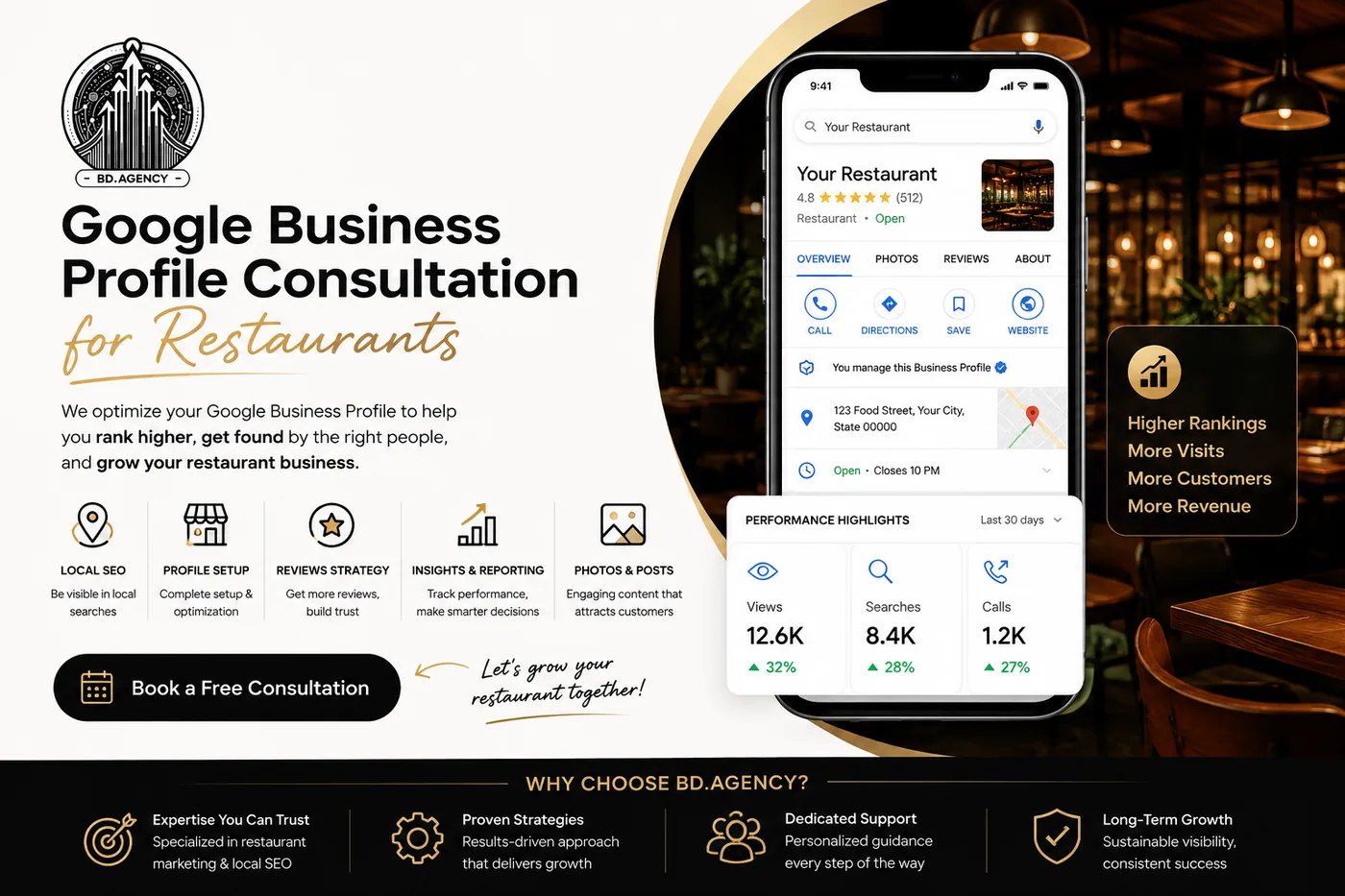
When someone searches "restaurants near me", Google shows a box of three places above everything else. That box — the Map Pack — is where the decision usually gets made. What puts you in it is not a website. It is your Google Business Profile, and specifically how complete, how correct and how active it is.
Before you spend a rupee anywhere else: check that your category is right, your hours are right, your phone number connects to a phone someone answers, and your address is exactly what is on your signboard. These sound trivial. They are the highest-return hour of work available to a restaurant.
Layer two: the two things people actually judge
Photographs and reviews. That is what a customer reads before choosing you, and it is not close.
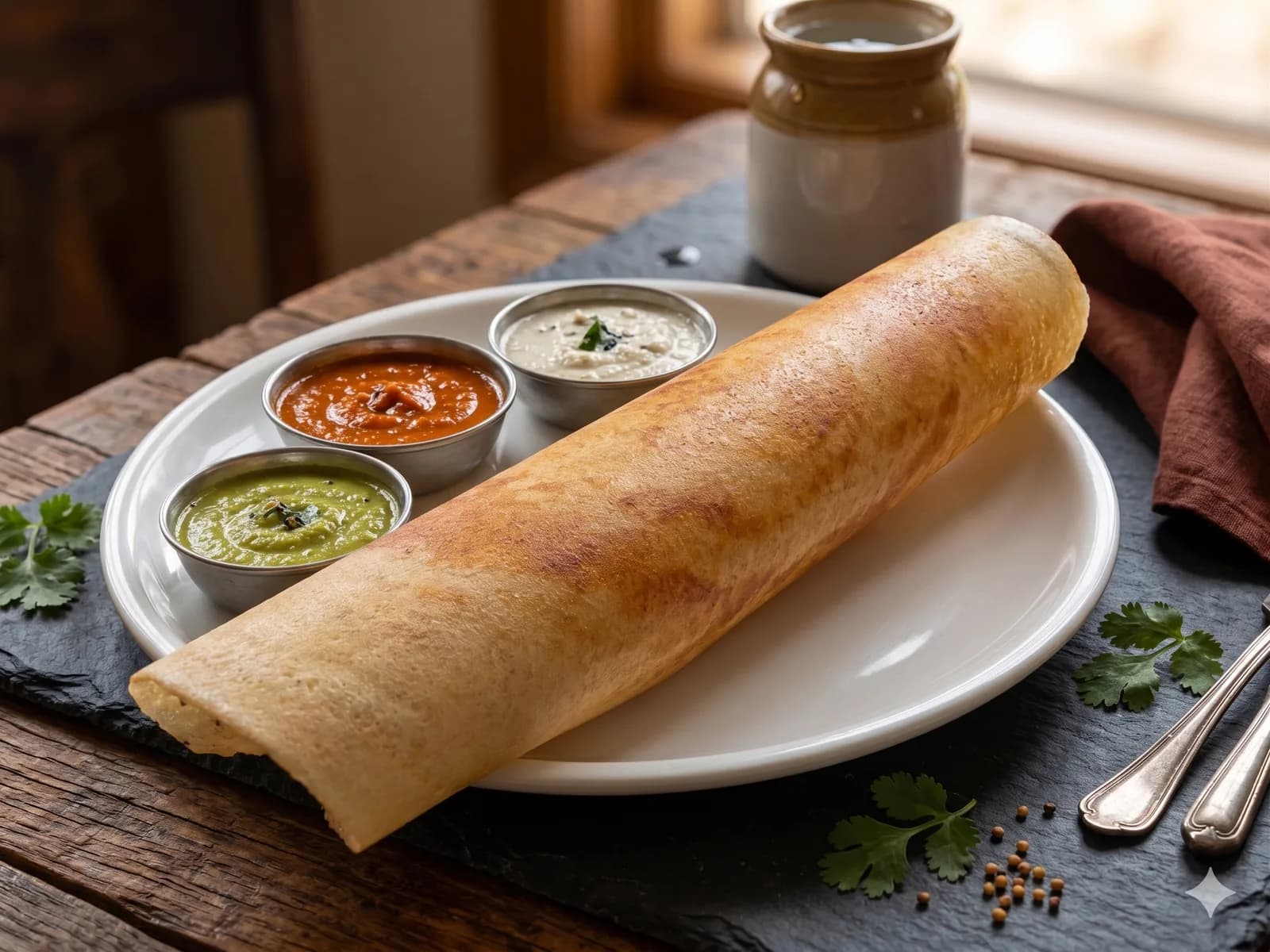
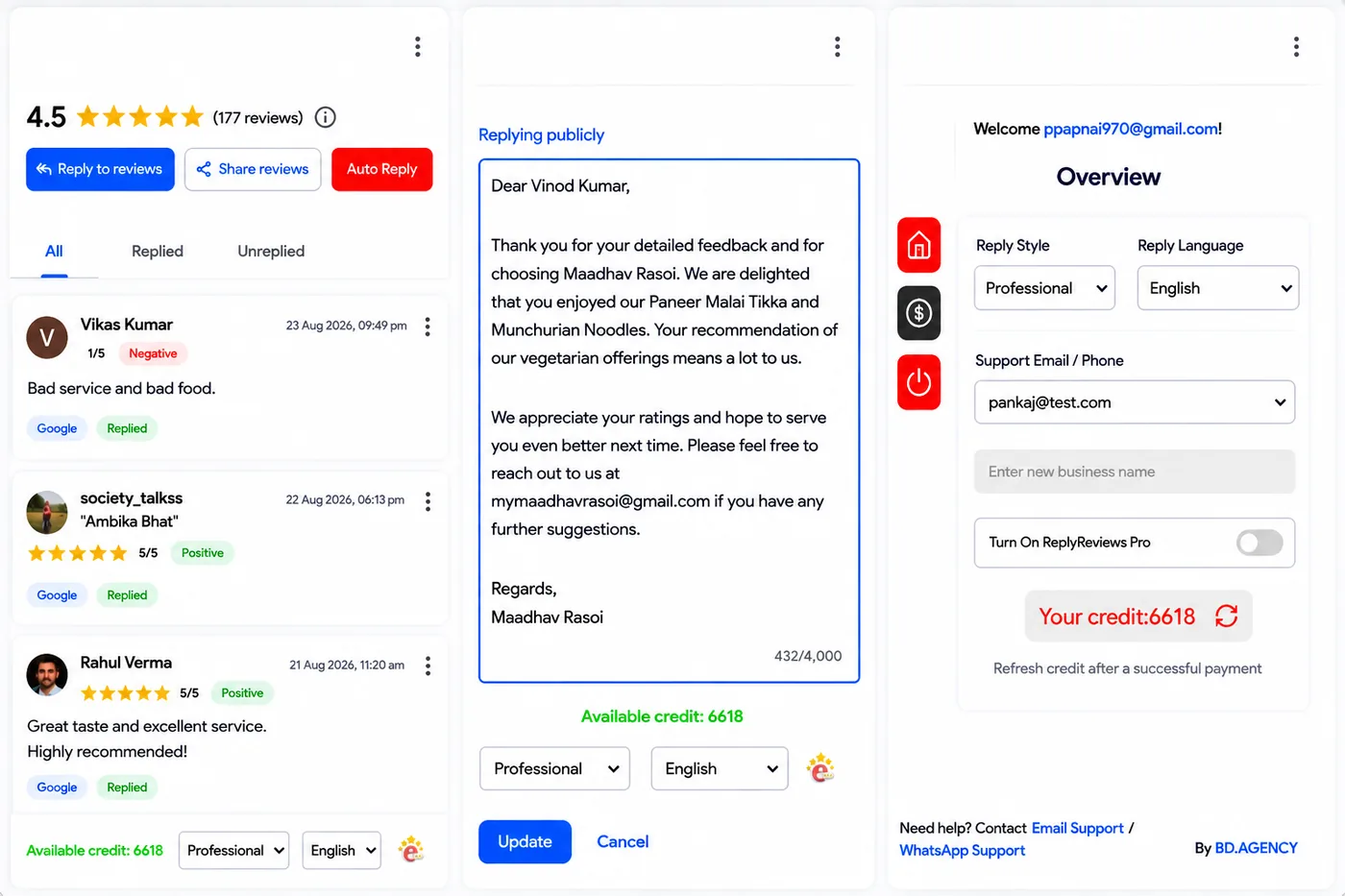
Photos do not have to come from a studio day. A clear, well-lit photo of the dish as you actually serve it beats a stock image of somebody else's food every time. Reviews do not have to be five stars — but they do have to be answered. A thread of unanswered complaints reads very differently from the same complaints with a calm reply under each one.
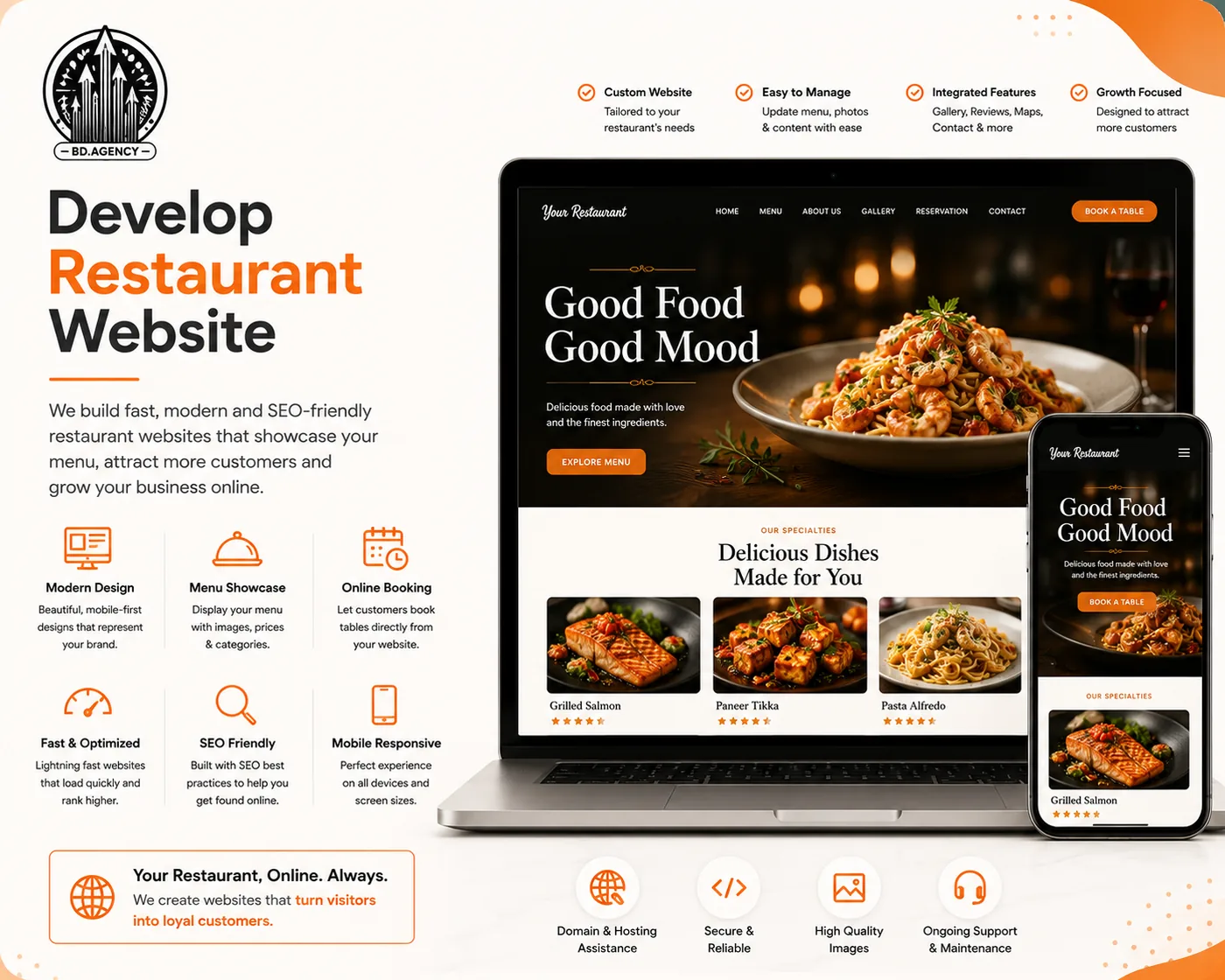
Layer three: your own website
A restaurant website has one job: answer the four questions someone standing on the street has. What do you serve, what does it cost, when are you open, and how do I get there? Everything beyond that is decoration.
Make the menu readable on a phone. Not a PDF that needs pinching and zooming — actual text, on the page, that Google can also read.
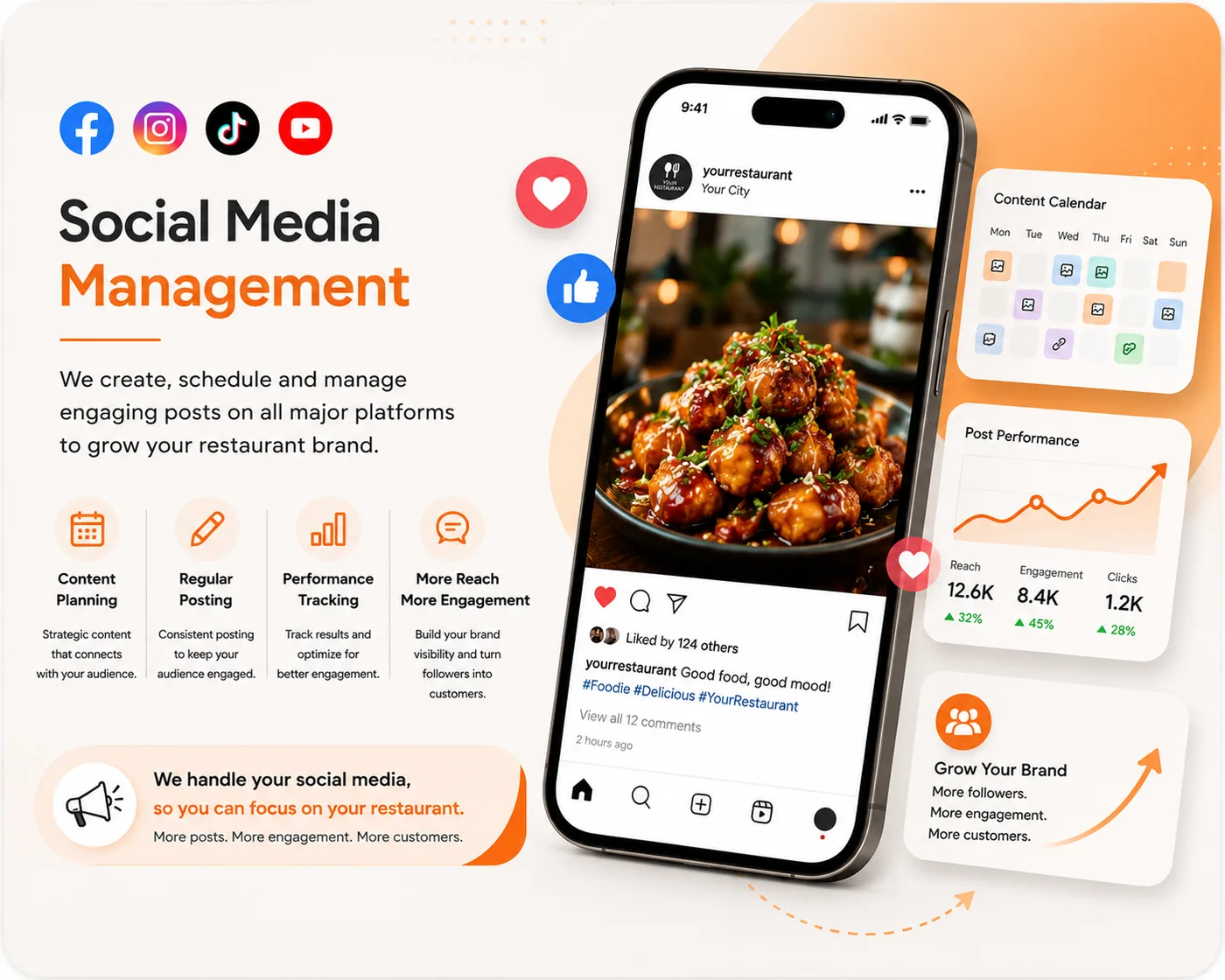
Layer four: social, at a rhythm you can keep
The mistake here is ambition. Ten posts in a launch week followed by three silent months is worse than one post a week forever, because the silence is what a new customer sees. Pick a rhythm the restaurant can sustain during its busiest month, not its quietest.
Layer five: ads
Now ads make sense. Google Ads reaches someone already searching for a place to eat. Meta Ads — Facebook and Instagram — reaches someone nearby who was not searching at all. Both send traffic to the listing, the site and the pages you have just spent four layers getting right.
What to ignore
Follower counts. Vanity impressions. Any platform your customers are not on. And any agency that wants to start you on ads before it has looked at your Google Business Profile.